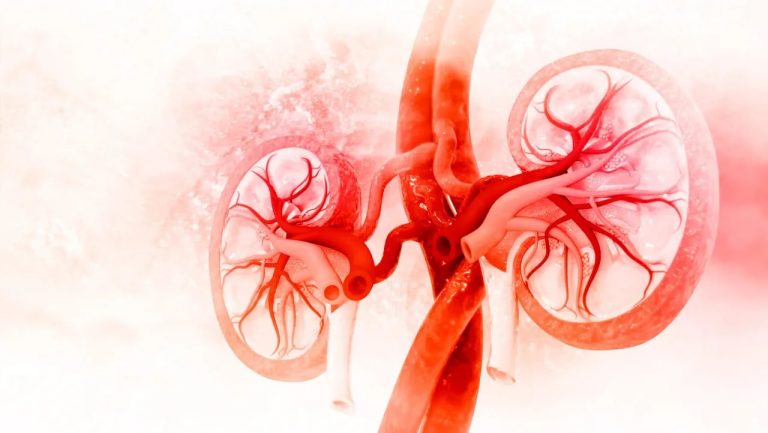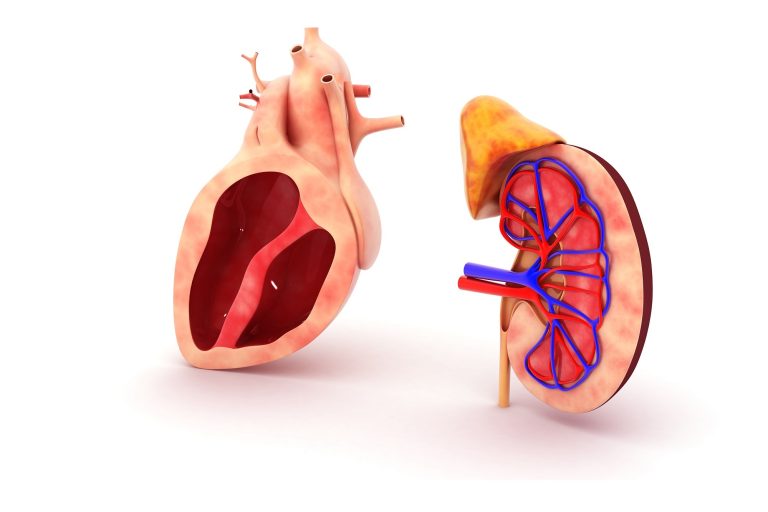







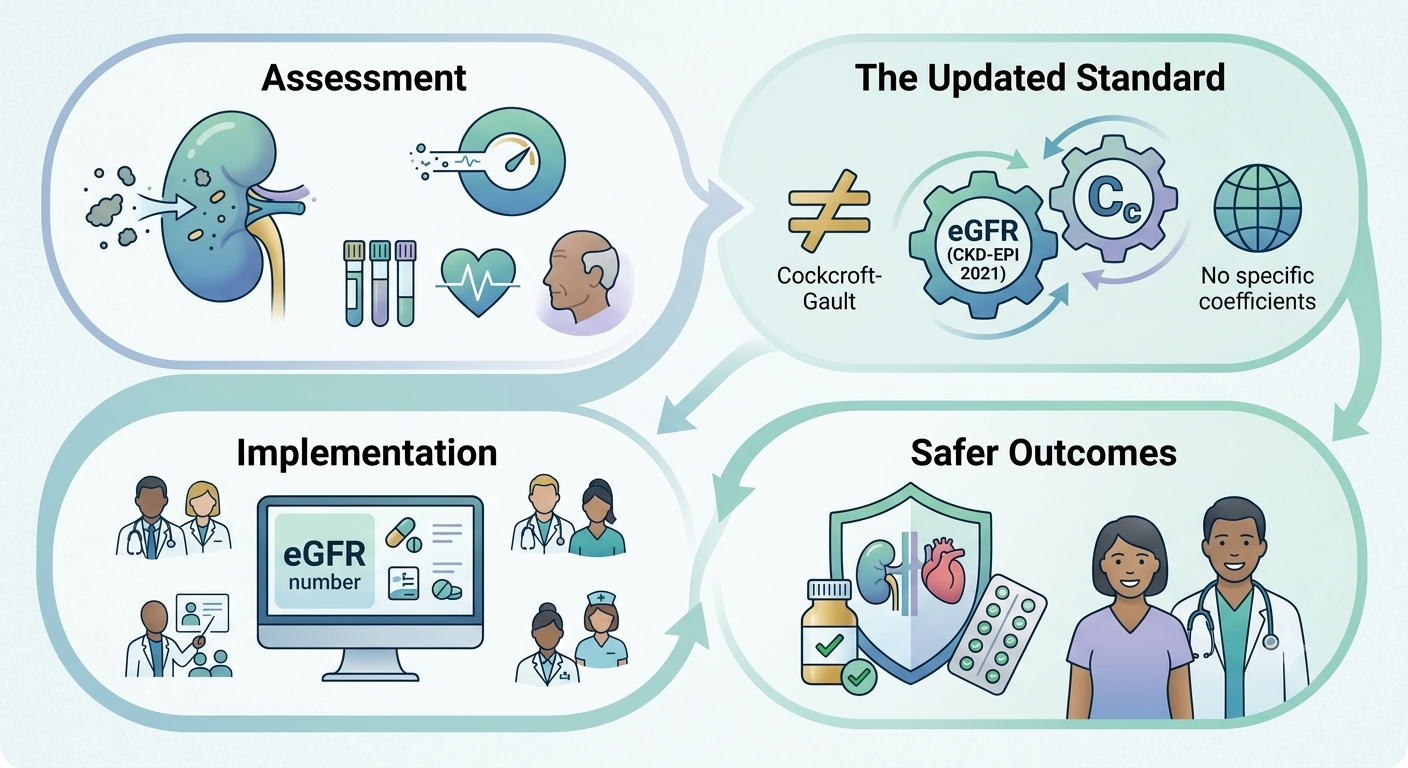

Healthy kidneys filter waste products and excess fluid from the blood. They also help maintain the body’s balance of minerals and support several essential functions. However, kidney disease can reduce this filtering ability and affect how the body processes certain medicines. Kidney Function Estimation helps healthcare professionals understand how well the kidneys work and make safer treatment decisions.
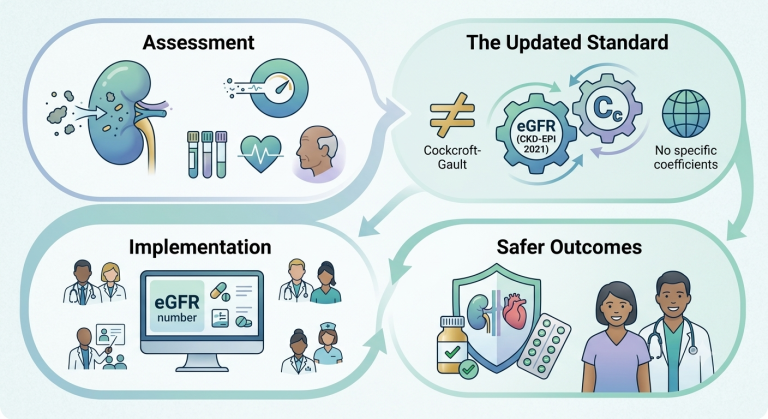
The National Kidney Foundation has highlighted an updated standard for estimating kidney function when making medication-related decisions. The recommendation supports the use of the 2021 Chronic Kidney Disease Epidemiology Collaboration (CKD-EPI) estimated glomerular filtration rate equation, adjusted for body surface area when appropriate for dosing decisions. This approach offers an alternative to the long-used Cockcroft-Gault creatinine clearance equation. Consequently, healthcare professionals need to understand how the updated approach works and when to apply it. Accurate estimates can help clinicians choose suitable medicine doses, reduce avoidable risks, and provide more consistent care.
Why Kidney Function Estimation Matters in Healthcare
Kidney function affects how the body removes many medicines and their by-products. When kidney function declines, some drugs may remain in the body for longer than expected. As a result, standard doses may increase the risk of side effects or toxicity. On the other hand, a dose that is too low may not provide the expected benefit. Therefore, healthcare professionals must consider kidney function when prescribing medicines that depend heavily on kidney clearance.
Kidney Function Estimation provides useful information for assessing these risks. Clinicians can use the results alongside the patient’s medical history, current medicines, laboratory findings, age, and overall condition. Furthermore, a consistent estimation method can help reduce differences between clinical teams and healthcare settings. However, no single calculation replaces clinical judgment. The appropriate approach depends on the medicine, the patient’s condition, and the evidence supporting its use.
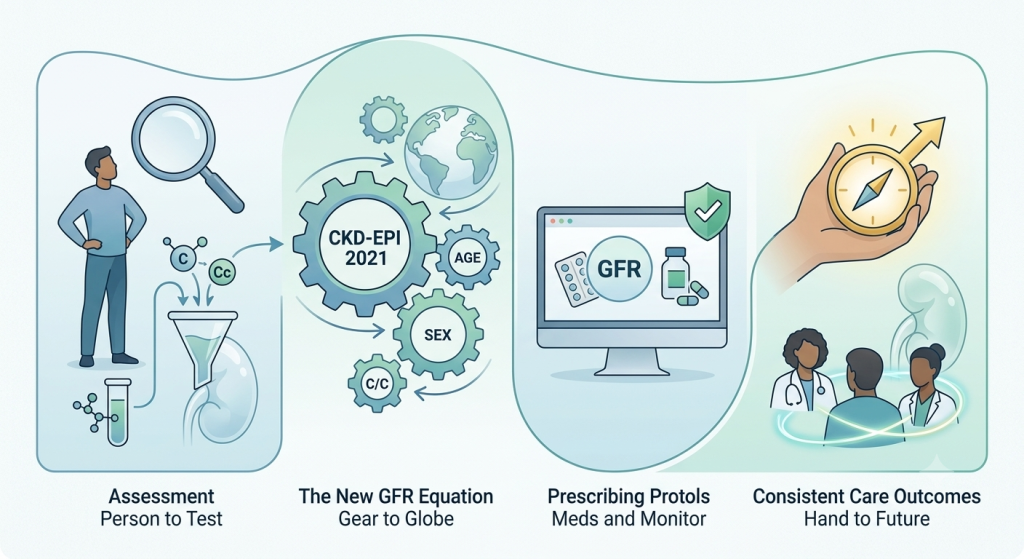
Understanding the CKD-EPI 2021 Equation
The CKD-EPI 2021 equation estimates the glomerular filtration rate, commonly called eGFR. This value indicates how effectively the kidneys filter waste from the blood. The equation uses standardized blood creatinine measurements, age, and sex. Importantly, it does not include a race coefficient. This supports a more consistent approach to assessing kidney function across different populations. Earlier equations sometimes included race-based adjustments. However, kidney health organizations have recommended race-free equations to support more equitable assessment and treatment. The CKD-EPI 2021 equation is now a recommended method for estimating GFR in adults.
In addition, clinicians can use an equation that combines creatinine and cystatin C when a more accurate estimate is needed. Cystatin C is a protein measured in the blood that can provide additional information about kidney filtration. Nevertheless, every estimate has limitations. Factors such as muscle mass, diet, certain medicines, and other health conditions can affect the markers used in these calculations. Therefore, clinicians should interpret results in the context of each patient’s needs.
Moving Beyond the Cockcroft-Gault Equation
For many years, the Cockcroft-Gault equation has played an important role in medication dosing. It estimates creatinine clearance using factors such as age, body weight, sex, and serum creatinine. However, the equation has limitations. It was developed using a relatively small group of White male participants, and its calculations depend on body-weight measurements. Changes in laboratory testing standards have also affected the consistency of older approaches.
By comparison, the CKD-EPI 2021 equation uses standardized creatinine measurements and was developed using more diverse populations. Research cited by the National Kidney Foundation also suggests that an eGFR-based approach, appropriately adjusted for body surface area, can improve estimates of drug clearance for certain medicines.
As a result, a professional consensus statement now recommends the 2021 CKD-EPI equation, adjusted for body surface area, for medication-related kidney function assessment. However, clinicians should still check the relevant drug label and clinical guidance because some medicines require specific calculations or monitoring methods.
Improving Medication Safety Through Better Kidney Function Estimation
Kidney Function Estimation plays an important role in reducing medication-related risks. For example, patients with reduced kidney function may need a lower dose or a longer interval between doses for certain medicines. First, healthcare professionals should review the patient’s latest laboratory results. Next, they should confirm which kidney function equation best fits the medicine and clinical situation. They should also consider body surface area when converting indexed eGFR into an absolute value for drug dosing, where appropriate.
Furthermore, clinicians need to review other medicines the patient takes. Some drugs can affect kidney function or interact with treatments that the kidneys remove. Therefore, medication reviews can help identify possible problems before they lead to complications. Regular monitoring remains important after treatment begins. In some cases, doctors may need to adjust a dose as kidney function changes. Patients should never change their prescribed medicines without consulting their healthcare professional.
The Role of Creatinine and Cystatin C Testing
Creatinine is a waste product produced by normal muscle activity. Healthy kidneys remove it from the blood, so blood creatinine levels help clinicians estimate kidney filtration. However, creatinine levels can vary with muscle mass, diet, and certain medicines. Consequently, creatinine alone may not provide the clearest picture for every patient.
Cystatin C offers another way to assess kidney filtration. When clinicians combine creatinine and cystatin C in an appropriate equation, they can often obtain a more accurate eGFR estimate than with either marker alone. Therefore, healthcare professionals may request cystatin C testing when creatinine-based results do not match the clinical picture or when a more precise estimate could affect treatment decisions.
Implementing the New Standard in Clinical Practice
Healthcare organizations need a clear plan to adopt updated kidney function estimation standards. The process should involve pharmacy teams, laboratory staff, prescribers, and clinical informatics specialists. First, organizations should review electronic health records and medication decision-support systems. These tools should display the appropriate eGFR value and support safe dosing decisions. Next, pharmacy and therapeutics committees should review the new recommendation and establish a practical implementation timeline.
Staff education is also essential. Clinicians need to understand the difference between eGFR and creatinine clearance, as well as the circumstances in which body surface area adjustments matter. In addition, healthcare teams should review existing prescribing protocols and identify medicines that require special attention. Clear documentation and communication can help prevent confusion during the transition. Finally, organizations should monitor prescribing practices and patient safety outcomes after implementation. Regular reviews can identify gaps and guide further improvements.
Supporting Better Outcomes With Accurate Kidney Assessment
Accurate Kidney Function Estimation can help healthcare professionals make informed medication decisions and provide more consistent care. The updated CKD-EPI 2021 approach offers a race-free method for estimating kidney filtration and supports safer prescribing when used appropriately. However, successful implementation requires more than changing a calculation. Healthcare organizations must update their systems, educate staff, review prescribing protocols, and monitor patient outcomes.
Most importantly, clinicians should interpret kidney function results alongside the patient’s medical history, laboratory findings, and treatment needs. By combining reliable estimates with careful clinical judgment, healthcare teams can improve medication safety and support better care for people living with kidney disease.